
Before i start creating my storyboards and shot lists i must look into camera techniques so that i can use these in my imagination sequences and or my interview segment.
This website shows multiple camera angle and shots that make films stand out from the rest.
Over-the-shoulder shot

Over-the-shoulder shots are just what the name says: a shot with an actor’s shoulder in the foreground, out of focus. I will tell you right away that good over-the-shoulder shots are some of the most time-consuming to shoot correctly because you need to make sure that there is neither too much nor too little shoulder in the frame. However, in my opinion, no serious filmmaker can afford not to learn this technique because it is narratively essential in many cases. Some directors openly say that they never shoot over-the-shoulder shots precisely because it takes ages to get the look they want and frequently can’t do it at all, but in my opinion, they are missing out. In my interview segment, this is going to be perfect for the back and forth between the interviewer and interviewee. Know i need to figure out what type of shots i need for my interviewee to walk into the office and greeting the interviewer.
Panning shot

Panning the shot is the horizontal equivalent of tilt shots. Like tilt shots, panning shots are conceptually simple and therefore usually overused and/or poorly executed. Exactly the same best-practice considerations made for the tilt shots apply to Panning shot: try and design them in such a way that you can lock off the tilt axis in order to keep the panning pure, and hire a competent camera operator, especially if your shots require precise timing and framing accuracy. Having a panning for my effects will work out great when i need a sturdy tripod shot. This is because i can create the panning in post-production so it looks like the shot was taken handheld and not takes from a still tripod shot.
Tracking shot: camera movement
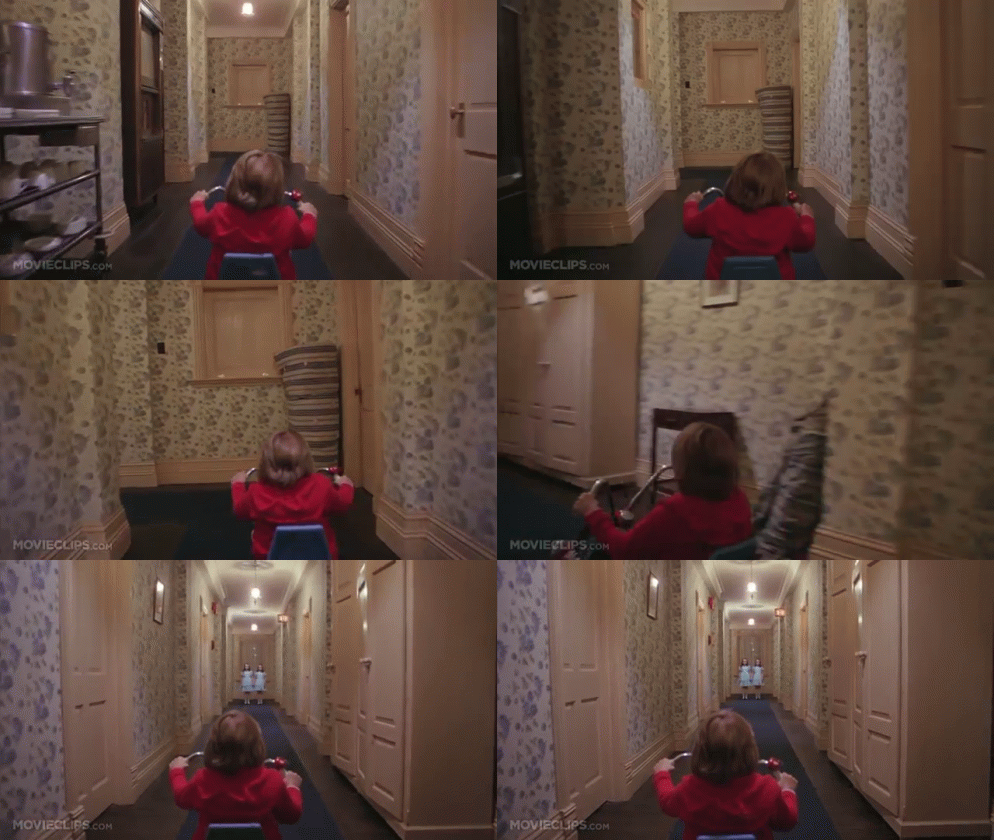
Setting up tracking shots is more complicated than setting up tilt or panning shots, but ultimately anyone can mount the camera on a dolly and moved the dolly along tracks. You must make it more interesting like bringing the track top a hold like in this shot above. This is the perfect kind of shot for my interviewee walking down the corridor and into the office room as it follows my actor and my audience can feel like they are going into the interview with him. I can also have this shot for most of my imagination sequences as i need the sequences to start off with my actor walking into the effect.
Creating my own shot
![[add-text output image]](https://im.ezgif.com/tmp/ezgif-1-7e05bf45d10b.gif)
Looking back on my panning shot I realised it would be a good idea to create a panning shot that is out of focus when starting off, then in focus when it hits my actor (as shown in my gif above). Having this shot as my actor just about walks into the interview room i can have this shot go into focus on the interviewers face. This will give the effect that the interviewee has noticed the interviewer and is nervous to have the interview with him. This will also make my audience feel nervous as if all these shots are placed together whatever the interviewee is feeling my audience will feel the same.
I can now start my script with all the research i have gathered throughout my blogs. That is because i need a script to then start my storyboards and then start to properly get into my planning.
 Brandon Rutlidge's - FMP - Level 3 Creative Media